
Operating scissor lifts on slopes presents unique challenges and requires strict adherence to safety protocols. Whether you work in construction, maintenance, or other industries that regularly use scissor lifts, knowing how to drive safely on slopes is critical to preventing accidents and injuries.
Types of Scissor Lifts for Operation on Slopes or Inclined Surfaces
Standard electric scissor lifts are designed for safe operation on firm, level ground only. These lifts are restricted to flat surfaces and cannot be operated on slopes, nor can their platforms be raised.
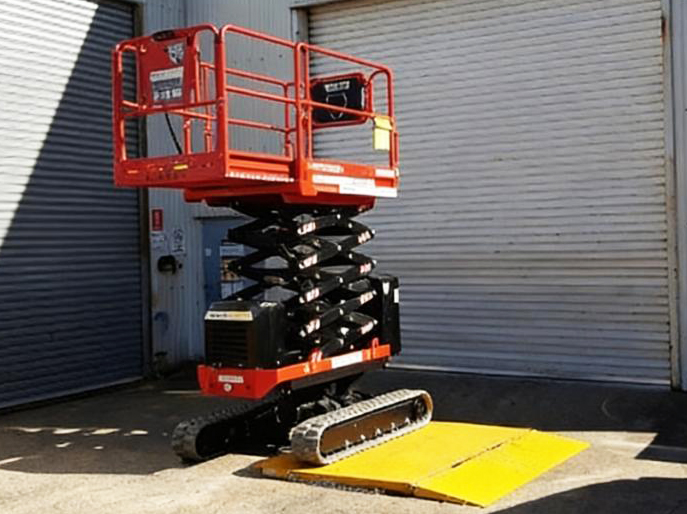
Rough-terrain or crawler scissor lifts are specially engineered to traverse uneven ground, with built-in 4-wheel drive delivering exceptional mobility. While these lifts still require a solid, stable surface to support outriggers or tracks for lifting operations, they can operate on slopes up to 20 degrees, depending on the specific model.
Scissor Lifts with Stabilisers / Outriggers
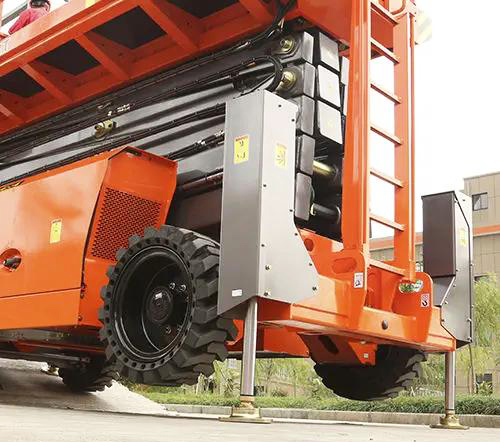
Scissor lifts equipped with deployable stabilisers or outriggers can secure the machine on slopes and keep the base level while the platform is raised and work is performed.
Off-road scissor lifts such as DAXLIFTER models come fitted with outriggers, enabling them to safely lift loads up to 454 kg to a height of 12 metres on working slopes up to 1.5 degrees.
Crawler Scissor Lifts
Another type of scissor lift suitable for safe operation on slopes is the crawler-driven model. This equipment features active dynamic levelling, allowing automatic self-levelling in both stowed and raised positions. As a result, it can operate on working slopes and inclined surfaces up to 15 degrees.
7 Safety Tips for Operating Scissor Lifts on Slopes or Inclined Surfaces
1. Perform Pre-Operation Inspections
Before operating a scissor lift on a slope, thoroughly inspect the equipment to ensure it is in good working condition. Check for any signs of damage, hydraulic leaks, or worn components.
2. Check the Slope Gradient
Assess the slope to determine if the scissor lift is suitable for safe operation. Refer to the lift manufacturer’s manual for the maximum allowable slope rating. Avoid working on slopes exceeding the recommended limit to prevent instability and tip-over accidents.
For added safety, all scissor lifts are fitted with level sensors that trigger an audible alarm and prevent platform elevation if the machine is unlevel or exceeds its permissible slope.
3. Engage Stabilisers and Brakes
Always deploy the scissor lift’s stabilisers before driving up or down a slope to enhance stability. Ensure the brakes are in good working order and properly engaged to prevent unintended movement.
4. Maintain Proper Load Distribution
To maintain balance, especially when working on slopes, distribute loads evenly across the scissor lift platform. Never exceed the lift’s maximum load capacity specified by the manufacturer.
5. Use Proper Driving Techniques
Exercise caution and use correct driving techniques when operating a scissor lift on slopes. Reduce speed and maintain a constant pace to avoid sudden movements that could cause loss of control. Watch for potential hazards such as uneven terrain or obstacles, and adjust your driving accordingly.
6. Monitor Weather Conditions
Be mindful of weather conditions that may affect the stability and safety of scissor lift operation on slopes. In Australia, where weather patterns can be unpredictable, strong winds or heavy rain can introduce additional risks.
If you are unsure which scissor lift is right for your job, contact our aerial work platform specialists for advice at sales@daxlifter.com / WhatsApp: +86 15192782747.
Post time: Apr-17-2026