
In modern industry, construction, and maintenance, working at height has become increasingly common, making the selection of stable, efficient, and safe equipment critically important. Scissor lifts, with their distinctive mechanical structure, provide excellent stability and spacious working platforms, positioning them as essential equipment for aerial operations. Among these, self-propelled electric scissor lifts have gained growing popularity in the European market in recent years due to their high mobility, ease of operation, and outstanding overall performance.
Self-propelled electric scissor lifts represent a key category within the scissor lift family. They integrate driving, lifting, and steering functions into a single system, enabling flexible operation at various heights and significantly improving productivity. The work platform is constructed from high-strength structural steel and manufactured using laser cutting, robotic welding, and single-sided welding with double-sided forming processes, ensuring superior structural integrity and long-term durability.
The core hydraulic system is equipped with a high-quality pump station and aerospace-grade cartridge valve technology, complemented by multiple safety devices—including a leveling alarm, balance valve, and automatic safety baffle. Together, these features ensure reliable stability when operating at heights of up to 16 meters with a rated load capacity of 320 kg. In addition, the horizontally extendable platform guardrail expands the effective working range, making the equipment well suited for high-altitude operations in factory workshops, large stadiums, airports, and industrial parks.
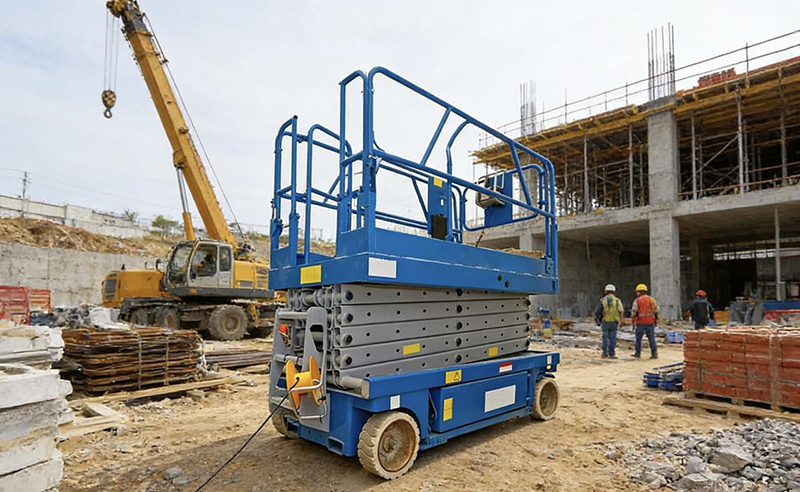
Standardized Operation and Safety Assurance
To fully realize the performance advantages of this equipment, standardized operation is essential. Each self-propelled scissor lift undergoes rigorous inspection and testing before leaving the factory. Prior to use, operators must conduct a basic inspection, including checking for leaks in the hydraulic and electrical systems. The four outriggers must be firmly supported on solid, level ground, with wooden blocks used if necessary. Before loading, the equipment should be operated without load for one to three cycles. When loading, materials should be placed as centrally as possible on the platform, and the movable guardrail gate must be closed and securely locked before operation.
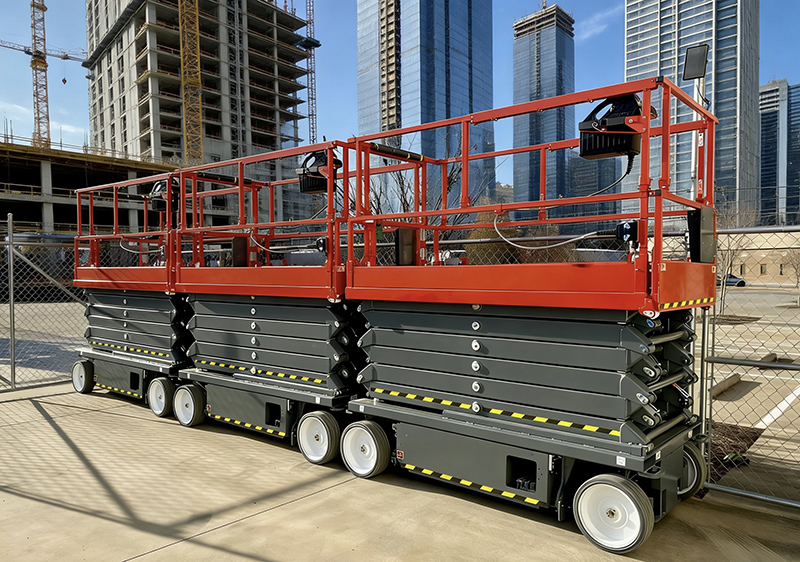
The operating procedure is clearly defined. To raise the platform, tighten the return valve clockwise to start the motor and control lifting or lowering using the manual directional valve handle. After reaching the desired height, return the handle to the neutral position and switch off the motor. For lowering, slowly loosen the return valve counterclockwise, allowing the platform to descend smoothly under its own weight. Reverse motor rotation is strictly prohibited at all times. The equipment is also fitted with an emergency manual pump, ensuring basic operability in special situations such as power failures.
Working at height inherently involves risk; therefore, strict compliance with safety regulations is mandatory. Operators must receive professional training and be fully familiar with the equipment’s performance characteristics and operating procedures. When purchasing equipment, companies should conduct comprehensive evaluations based on actual needs, including usage frequency, working height, and load requirements. Supplier selection should prioritize manufacturer credibility and after-sales service capability. Upon delivery, all technical documentation and parts lists must be carefully checked, followed by a thorough visual and functional inspection.
Key Precautions for Use
To ensure long-term safe operation, the following points must be strictly observed during daily use:
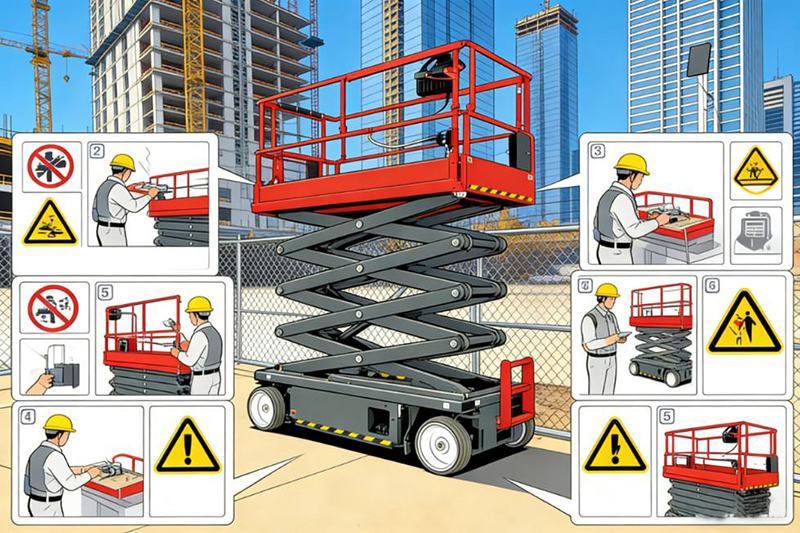
- Site Requirements: The equipment must be positioned on firm, level ground to prevent tipping during operation.
- Overloading Is Strictly Prohibited: Operation must remain within the rated load capacity. In emergency situations, short-term overloading must not exceed 10%.
- Load Distribution: Loads should be evenly distributed. Off-center loading is permitted only in special cases, where longitudinal load must not exceed one-half of the rated load and lateral load must not exceed one-third. The offset point should be approximately 300 mm from the platform edge.
- Cargo Securing: Rolling materials such as pipes must be securely fastened to prevent movement.
- No Passengers Allowed: This equipment is designed exclusively for material lifting. Carrying passengers is strictly prohibited. Dedicated passenger platforms are equipped with fall-protection devices (such as rupture-proof valves) to prevent uncontrolled descent in the event of hydraulic failure.
- Anti-Crushing Awareness: Operators must keep hands, feet, and clothing clear of moving parts to avoid crushing hazards.
- Immediate Shutdown in Case of Abnormalities: If the platform fails to move after pressing the lift control, stop the machine immediately and inspect it.
- Do Not Adjust Safety Devices: If the platform fails to rise and a whistling sound is heard from the relief valve, stop operation immediately. Continued operation may seriously damage the hydraulic pump. The relief valve is a critical safety component and must not be adjusted arbitrarily.
- Stop Before Loading or Unloading: All loading and unloading operations must be carried out only after the platform has fully stopped and stabilized.
We guarantee that every self-propelled electric scissor lift leaving our factory undergoes strict individual inspection to ensure full compliance with design specifications and customer requirements. In addition, we have established a professional after-sales service system to provide timely and effective solutions to any quality issues, safeguarding customer rights and ensuring a reliable user experience.
In conclusion, self-propelled electric scissor lifts are becoming indispensable tools for enhancing efficiency and safety in aerial work. Proper equipment selection, standardized operating procedures, and strict adherence to safety guidelines are essential to maximizing their value while minimizing operational risks.
Post time: Jan-24-2026